I first met Abdi Nageeye when he stopped in London after the Boston Marathon in April this year for some post-marathon recovery treatment.
Despite being one of the world’s leading marathon runners, I was immediately struck by how humble and approachable he was. We were introduced through our mutual friend Alison Walker.
A few weeks later, during his first week back in training camp in Kenya, Abdi kindly recorded a series of WhatsApp voice notes answering my questions about his remarkable journey—from almost giving up the sport to becoming an Olympic silver medallist and winning the 2024 New York City Marathon.
I’ve lightly edited his responses for clarity while keeping them as close as possible to his own words. I hope you enjoy reading them as much as I enjoyed hearing Abdi tell his story.
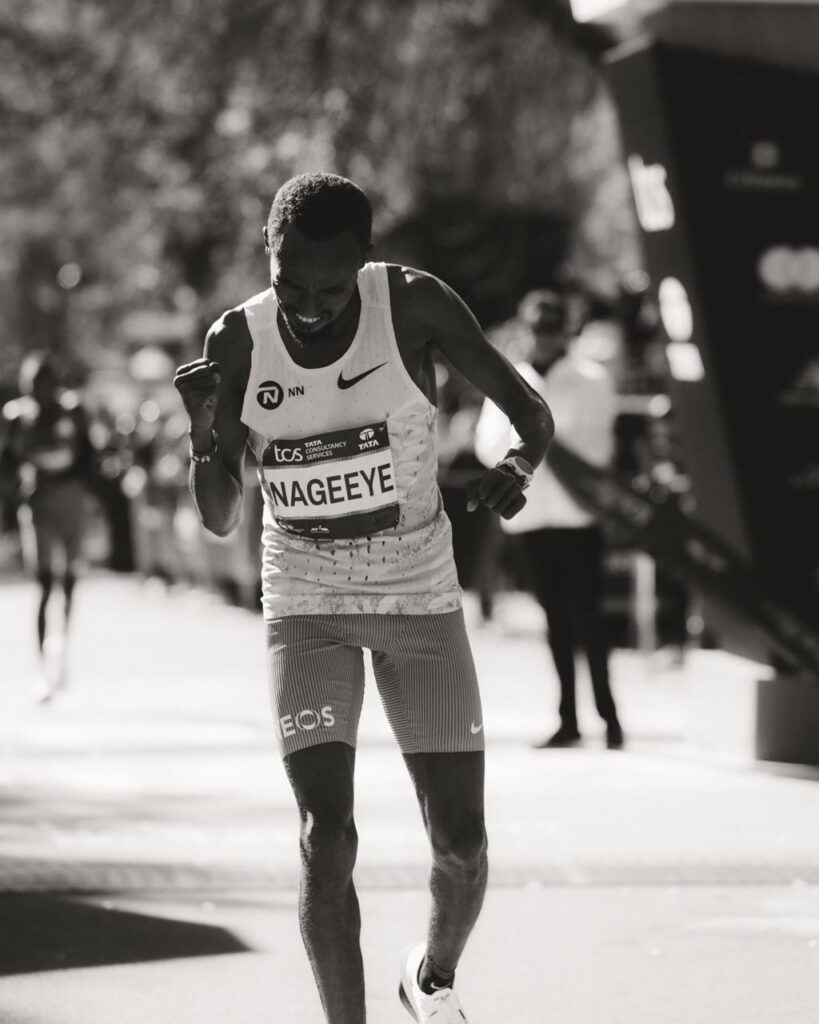
Abdi Nageeye
Athlete Profile
How did you first get into running?
I started running in the Netherlands in 2007. Before that I used to play football. Through a family friend I was introduced to running, and I immediately fell in love with it.
I trained throughout that summer, and at the end of it I had to make a decision: go back to football or continue with running. Running just felt amazing, so I decided to commit to running.
Looking back, what were the most important moments in your journey from a talented young runner to becoming one of the world’s best marathon runners?
One of the biggest moments came just four months after I started running, when I qualified for the European Junior Championships in Spain in 2007. I couldn’t believe it. I was wearing the Dutch orange vest, and coming from football, wearing that orange singlet on a big stage felt like such an honour. I remember thinking, “Wow, after only four months I’m already here.”
Of course, I was wrong to think success would come that quickly. I thought I’d become a world-class athlete very fast, but, it took me more than ten years.
There was also a period around 2011 and 2012 when I seriously thought about stopping. Those were difficult years. Financially things were hard, my results weren’t coming, and I had to decide whether I could continue. I was around 23 years old, and I had to ask myself whether I could survive just paying my rent and buying training gear, while all my friends had apartments, cars and girlfriends.
I told myself “Let me try one more year”. I kept doing that for the next three years, until everything finally came together at the end of 2015 where I qualified for the Summer Olympics in Rio, 2016 which gave me the breakthrough that I’d been working towards for many years.
What does a typical training week look like for you when preparing for a marathon?
A typical training week is fairly simple.
On Monday I do an easy run in the morning and go to the gym in the afternoon.
Tuesday is two easy runs, usually around 18 kilometres in the morning and 10 kilometres later in the day.
Wednesday is my faster session. It might be a fartlek session with efforts such as 10 minutes and 8 minutes, for a total of around 15 kilometres.
Thursday is similar to Tuesday: two easy runs, usually something like 18 km and 10 km, or 17 km and 10 km, or 16 km and 10 km.
Friday is a track session. It could be 2,000-metre, 3,000-metre, 1,600-metre or 1,200-metre repetitions, with a total volume of around 16 kilometres. In the afternoon I’ll go to the gym and then do an easy 10 km run.
Saturday is two easy runs again.
Sunday is always my long run. That could be 30 km, 32 km or 40 km. Before a marathon I normally do two 40 km long runs.
Everything builds progressively. The track sessions at the start of the training block aren’t the same as they are at the end because naturally you become faster. I always go by feel. At first you’re a little slower, but every week you can see yourself progressing. I always say it happens naturally because your speed and endurance improve without forcing anything.
What are the key training sessions that give you confidence that you’re ready to race well?
The sessions that give me confidence are the longer tempo runs, especially a 20 km tempo.
I also pay attention to my heart rate. If I can run a good steady pace with a low heart rate, even on easy runs, that’s a really good sign.
Recovery is just as important. If I can do a fast 30 km or 40 km run and recover well within two days, then I know I’m in good shape.
If you’re not recovering properly, you’re struggling to sleep or your body feels hot all the time, then you know the training hasn’t gone well.
As long as I’m recovering well, I’m always happy.
Can you talk us through your experience of winning the 2024 New York Marathon? What was going through your mind in the final kilometres?
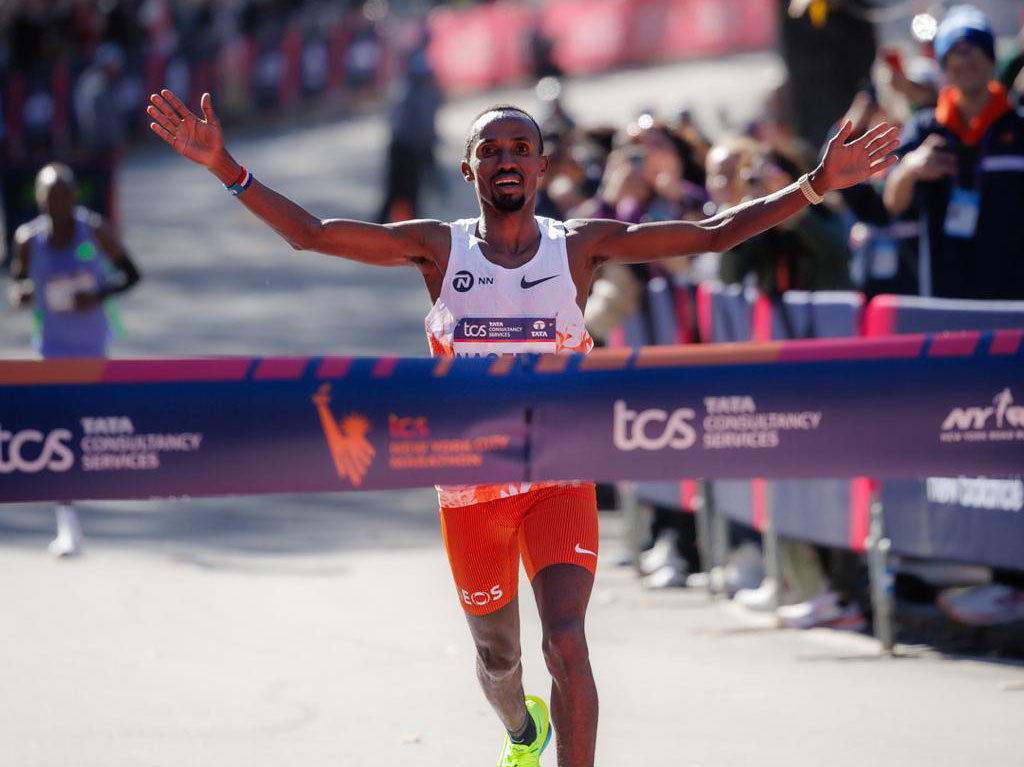
Winning New York was a dream come true. It was one of my perfect races and, surprisingly, also one of the easiest races I’ve ever run. I never really felt pain.
During the race I remember wondering why so many of the big names were dropping off. Afterwards I realised we’d run a (big negative split with a) 62-minute second half.
I remember on the bridge – I think before First Avenue – that a group moved away and there was maybe a 50- or 60-metre gap. But I wasn’t worried for even a second. I knew I’d close the gap easily. I had so much confidence.
Even in the final sprint in Central Park, when I was going away from (Evans) Chebet, I didn’t feel as if I really sprinted. I just thought “Let me change gear”. I felt like I still had another two or three gears left, and suddenly he dropped away. I remember thinking, “Wow, that was easy.”
It was one of my easiest races, but it came after one of the best training periods I’d ever had.
Were there any other key factors that contributed to your success in New York?
The disappointment at the Paris Olympics also helped me. When you have a sad day or a disappointing race, that is it – you have to move on. The next day I left, went back to Nairobi, and I was already in Eldoret before the closing ceremony, and I got straight back to training. For me there was no point dwelling on disappointment. My feeling was that nobody was going to bring me back to the Olympics. It was disappointing, but that was it. The sooner you move on, the better it is for yourself.
That mindset helped me have one of the best training blocks of my career before New York.
Of all your races and performances, which are you most proud of and why?
Editor’s note: Interestingly, Abdi didn’t choose just one race. Instead, he reflected on several moments that shaped him both as an athlete and as a person.
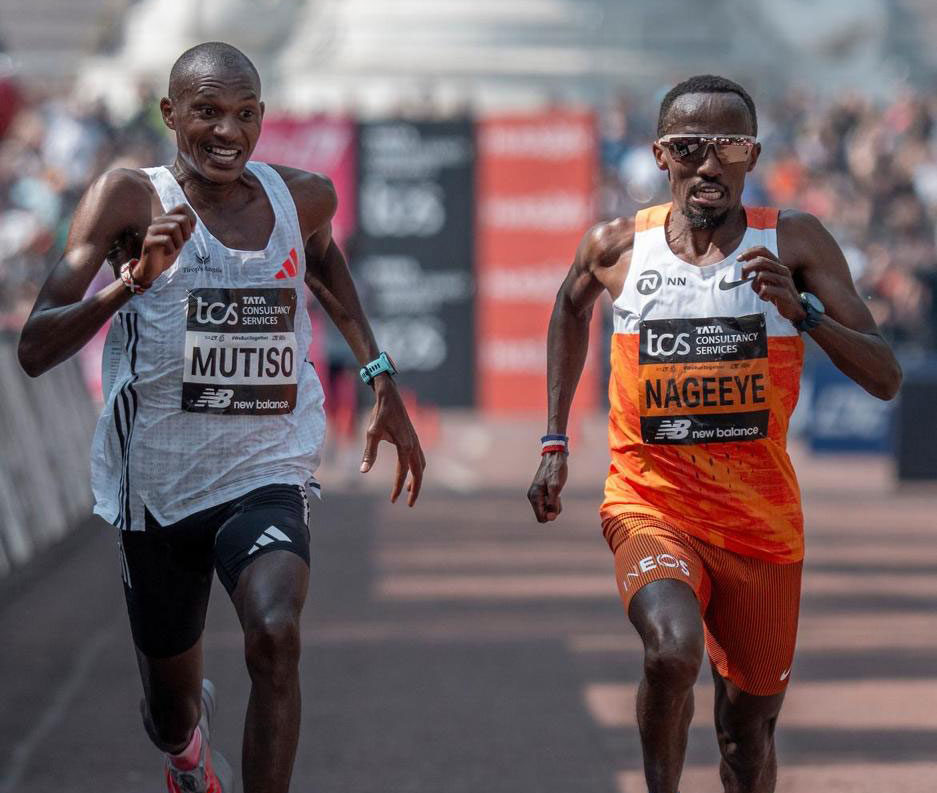
Of course, winning the Silver Medal at Tokyo Olympics was very special. Particularly being able to help my friend Bashir (Abdi) into Bronze Medal position was amazing.
Editor’s note: In the closing stages of the Tokyo Olympic marathon, Abdi encouraged his friend and long-time training partner Bashir Abdi as they raced towards the finish together. Abdi went on to win the silver medal, while Bashir secured bronze in a closely contested final few hundred metres, making it a memorable double podium for two athletes whose careers and friendship have been closely intertwined.
Despite my own disappointment, the Paris Olympics were still very special as my friend Bashir won a Silver medal. Leading up to the Olympics, people don’t realise that I was injured through January, February, and March. Even in June I’d almost given up hope of making the Olympic team.
In July I was still messaging Michel Butter, who was fourth on the Dutch Olympic selection list, updating him after my long runs because if I couldn’t race, he would take my place, and I didn’t want to take his place if I was injured.
After every 30 km run I’d tell him honestly how things were going. Finally, about two or three weeks before the Olympics, I told him, “Michel, I think I’m in good shape now and I will run the Olympics.”
To this day he still respects me for being honest with him throughout that period.
What have you learned from training and racing alongside the very best marathon runners in the world?
What I have learned, especially from Eluid (Kipchoge), is that you learn more from training than from racing. In the race, you have to be in shape to do things. In New York, if I had not been in shape, I would not have been able to do what I did.
For me, the most important lessons come from watching what these athletes do every day in training. Take Eliud, for example, during training he’s incredibly disciplined, completely focused and an amazing person. Watching how he approaches every session has taught me more than anything I’ve learned during races.
As for tactics, I think I’m quite a smart runner. If I’m fit, I believe I can make good decisions during the race. But first you have to be in shape if you want to run 2:04 and win a major marathon – that’s the most important thing.
You have competed at the highest level both before and during the super-shoe era. How have advances in footwear technology changed elite marathon racing?
Editorial note: Much has been written about how “super shoes” have transformed marathon running. I was interested to hear Abdi’s perspective, having competed successfully both before and during this era. His answer surprised me—not because he focused on speed, but because he believes the biggest impact has been on recovery, consistency, and career longevity.
The shoes have changed a lot.
You recover better, you have less pain and you’re able to continue training for longer. Years ago, people might stop their long runs at 37 or 38 kilometres, now it’s much easier to go to 45 kilometres.
The shoes allow us to handle more training.
Even the everyday training shoes, without carbon plates, have much more cushioning. Combined with things like Maurten, better nutrition and better recovery things, everything has improved—not just the shoes.
When I first started running, athletes often retired at 35 or 36 because they thought they were too old and done. Elites have shown the world that if you’re disciplined and you’ve invested properly in your career over many years, you can keep competing much longer.
The shoes help, but you still need a strong endurance base. I’ve seen athletes try to come back later in their careers because they see others competing into their late thirties or forties, but if they never built that endurance base, they keep getting injured.
The shoes can help you enjoy a longer career, but you need that foundation first.
What goals and ambitions do you still have for the future?
The last two marathons haven’t gone the way I wanted because of injury.
Right now my goal is simply to come back and perform at my best again. I’m feeling confident that I can continue competing for several more years. I still feel young, I still feel ambitious, and that’s a really nice feeling. I only started training again yesterday after returning to Kenya, so now it’s about setting new goals and preparing for an autumn marathon. This is a very important season for me.
Final thoughts
Speaking with Abdi, what impressed me most wasn’t simply his marathon performances—it was the patience, humility and resilience that underpin them.
Whether describing the uncertainty of his early career, the disappointment of the Paris Olympics, or the joy of winning the New York City Marathon, one message came through consistently: success at the highest level is built over many years through disciplined training, learning from setbacks and trusting the process.
Those lessons apply just as much to recreational runners as they do to Olympic medallists. Whatever your current goal, I hope this conversation has provided a few ideas and a little inspiration for your own running journey.
A huge thank you to Abdi for so generously sharing his time and insights. If you enjoyed this interview, please consider sharing it with a fellow runner, and keep an eye on the London Running Physio website as I’ll be continuing this interview series with some of the world’s leading runners and coaches.
If you’re currently dealing with a running injury, returning to running after time away, or simply looking to run more consistently, I’d be delighted to help. London Running Physio provides expert assessment and treatment for runners of all abilities, both in person in Central London and via online consultations.
If you’re looking to improve your performance with structured training, I can also recommend experienced UK Athletics-qualified running coaches who may be a good fit for your goals.
Happy running!
Scott Newton
London Running Physio